Eating with Our Hands: A Lesson I Didn't Expect
When you're learning a new language, the biggest lessons don't always come from a textbook or an app. Sometimes they come from sitting on the floor of someone's home, eating rice with your hands, and realizing you've been thinking about food all wrong.
The Invitation
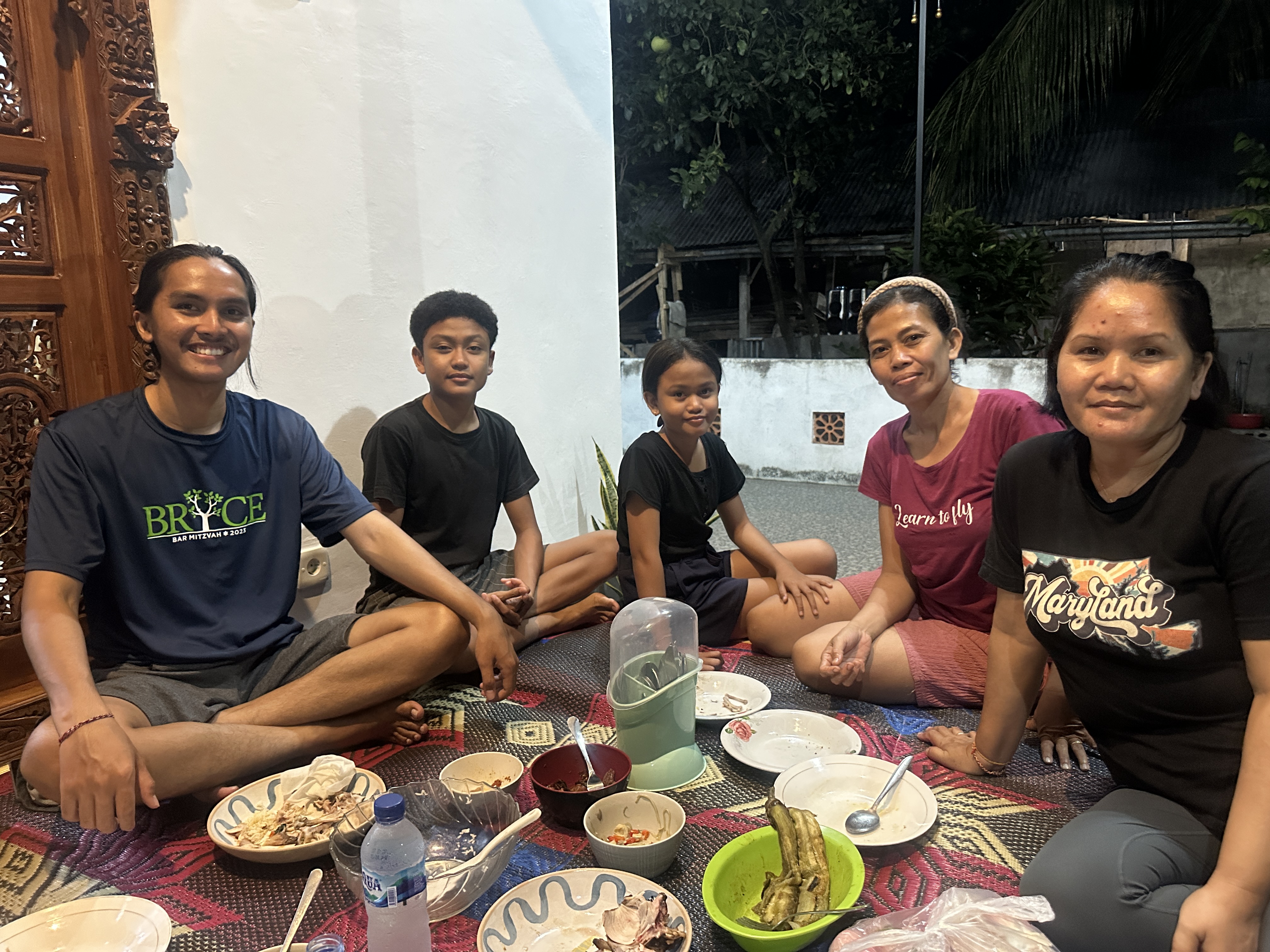
A few weeks into my time in Indonesia, my Bahasa teacher invited me to his home for dinner. "Come eat with us," he said casually after our lesson. I said yes without thinking much about it. I assumed it would be a normal dinner — a table, chairs, maybe some rendang if I was lucky.
When I arrived, the living room floor was covered with a large mat. His wife had laid out dishes across it: rice in a big bowl, ayam goreng (fried chicken), sambal, sayur (vegetables), tempe, and a few things I couldn't identify. There were no plates. No forks. No table.
"Duduk saja," he said. Just sit down.
Learning to Eat Again
I watched as everyone scooped rice onto banana leaves with their right hand, pressed it into a small ball with their fingers, and brought it to their mouths. It looked effortless. Natural. Like breathing.
My first attempt was not that. Rice stuck to my fingers. Sambal dripped down my wrist. I couldn't figure out the right pressure — too loose and the rice fell apart, too tight and it turned into a paste. My teacher's kids watched me and giggled. His wife smiled and said, "Pelan-pelan saja." Take it slow.
It took me a solid ten minutes to get comfortable. And even then, "comfortable" is a generous word. But something shifted in my brain around that ten-minute mark. I stopped thinking about the mechanics and started thinking about the food. The rice tasted different when you eat it this way. You feel the warmth. You control the portion with every scoop. You're not just eating — you're touching your food, and somehow that makes the whole experience more present.
Makan Pakai Tangan
In Indonesian, eating with your hands is makan pakai tangan — literally "eat using hands." It's not a novelty or a tradition reserved for special occasions. For many Indonesians, especially in Java and Sumatra, it's just how you eat. Every day. Every meal.
There are some unspoken rules. You always use your right hand — the left hand is considered unclean. You don't lick your fingers mid-meal (that comes at the end). And you keep your portion tidy; nobody wants to watch you make a mess.
My teacher explained that eating with your hands connects you to the food. "Kalau pakai tangan, kamu bisa rasa makanannya," he said. When you use your hands, you can feel the food. He wasn't being philosophical — he meant it literally. You feel the temperature. The texture. You know exactly what you're putting in your mouth.
On the Floor, Not at the Table
Eating on the floor — makan lesehan — is common in many Indonesian homes, especially for family gatherings or when guests come over. There's no hierarchy at a lesehan. No head of the table. Everyone sits in a circle, the food is in the middle, and you take what you want.
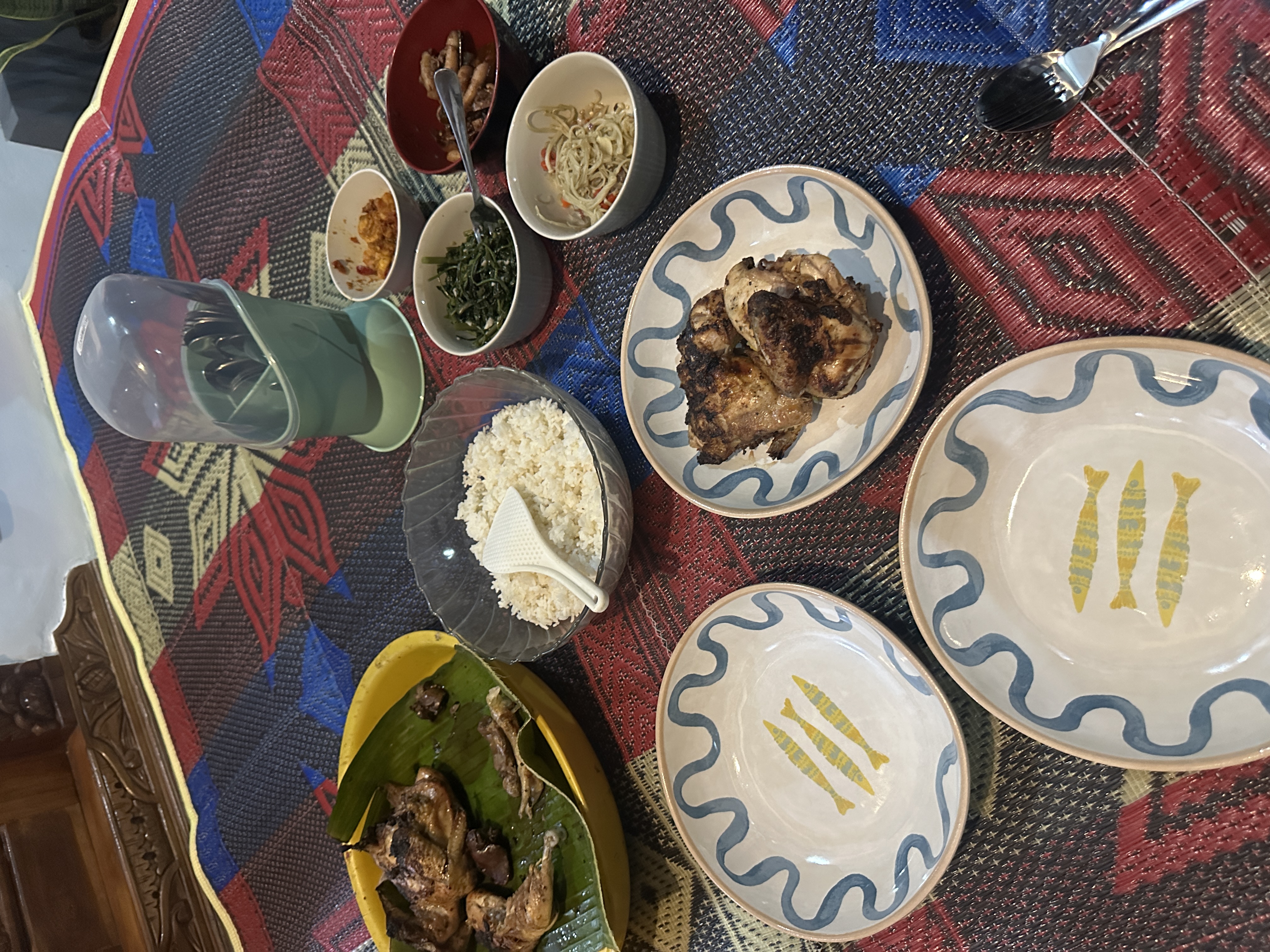
That evening at my teacher's home, sitting cross-legged on the mat, I realized I was more relaxed than I'd been at any restaurant meal in months. There was something about being on the floor, close to the ground, that made the whole thing feel intimate and unhurried. The conversation moved slowly between Bahasa and English. His kids asked me questions about America. His wife kept pushing more chicken toward me — "Tambah lagi, tambah lagi." Take more, take more.
What Food Teaches You About Language
This is the thing nobody tells you about learning a language: the words start making sense when you live them. I had studied the word tangan (hand) dozens of times in flashcards. But that evening, when my teacher said "pakai tangan kanan" (use the right hand) and gently corrected me as I instinctively reached with my left, the word became real. It wasn't a vocabulary item anymore. It was something my body understood.
The same thing happened with kenyang (full). I had seen it in a lesson. But when his wife asked "Sudah kenyang?" and I patted my stomach and said "Sudah, terima kasih" — that was the moment the word stuck forever. I didn't need a flashcard. I needed a full stomach and a reason to say it.
Trying It Yourself
If you ever get the chance to eat with your hands in Indonesia — at a Padang restaurant, at a friend's home, or at a street-side warung — try it. You'll feel awkward at first. Rice will fall. Sambal will get places it shouldn't. That's fine. Everyone has been there.
Here are the basics:
- Right hand only — always. The left hand stays in your lap or holds a glass.
- Scoop, don't grab — use your fingertips to push rice into a small mound, then scoop it up with your four fingers and thumb.
- Mix as you go — combine a bit of rice with sambal or lauk (side dish) before each bite.
- Wash first — there's usually a bowl of water (kobokan) or a sink nearby. Use it.
- Pace yourself — it's not a race. The food isn't going anywhere.
A New Way to See Indonesia
That dinner changed how I see food, how I see hospitality, and honestly, how I see language learning. The best moments aren't in the lesson — they're in the living room, sitting on the floor, trying to eat rice without making a mess, and laughing when you do.
Makan pakai tangan isn't just about hands. It's about connection — to the food, to the people you're eating with, and to a culture that believes the simplest way is often the most meaningful.
Sampai jumpa di artikel berikutnya!
— Bijan
Comments